
In This Article
If you have ever stood in a skincare aisle wondering about AHA vs BHA, you are not alone. It is one of the questions I hear most often in my treatment room in Orlando. Both are chemical exfoliants, both promise smoother skin, and both show up on labels as a jumble of acids. The difference matters, though, because choosing the wrong one can leave your skin irritated instead of glowing.
In this guide I will break down what each acid does, which skin types they suit best, and how to use them without overdoing it.
What Is Chemical Exfoliation?
Your skin naturally sheds dead cells, but that process slows down with age, sun exposure and dehydration. When old cells pile up, skin looks dull, feels rough and pores clog more easily.
Chemical exfoliants loosen the bonds that hold those dead cells together so they can rinse away gently. Unlike gritty scrubs, they work evenly across the skin without rubbing or tearing. According to the U.S. Food and Drug Administration, how strongly an acid exfoliates depends on the type of acid, its concentration and the product's pH, which is why two "glycolic" products can feel completely different.
AHA vs BHA at a Glance
| AHA (alpha hydroxy acid) | BHA (beta hydroxy acid) | |
|---|---|---|
| Common forms | Glycolic, lactic, mandelic | Salicylic acid |
| Dissolves in | Water | Oil |
| Where it works | Skin's surface | Inside the pore |
| Best for | Dullness, dryness, uneven tone, fine lines | Oily skin, blackheads, breakouts, large-looking pores |
| Feels like | Brightening, softening | Clarifying, oil-balancing |
What AHAs Do for Your Skin
Alpha hydroxy acids are water-soluble, so they stay on the surface of the skin. That is exactly where dullness, rough patches and uneven tone live.
- Glycolic acid has the smallest molecule, so it works quickly and gives the most noticeable glow.
- Lactic acid is gentler and also helps skin hold on to moisture, a great fit for dry or sensitive skin.
- Mandelic acid has a larger molecule that absorbs slowly, making it a softer option for beginners.
AHAs are a good match if your skin looks tired, feels dry, or has sun spots and fine lines you would like to soften.
What BHAs Do for Your Skin
The most common beta hydroxy acid is salicylic acid. Because it dissolves in oil, it can travel into the pore and clear out the mix of oil and dead skin that causes blackheads and breakouts. The American Academy of Dermatology notes that salicylic acid works best on whiteheads and blackheads because it unclogs pores and exfoliates the skin.
BHAs are also calming, which makes them a smart choice for oily skin that tends to look red around breakouts. If your T-zone gets shiny by lunchtime here in the Florida heat, a BHA is often the better place to start.
AHA vs BHA: How to Choose for Your Skin Type
Here is how I usually think about AHA vs BHA for each skin type. Use it as a starting point:
- Dry or mature skin: start with an AHA such as lactic acid.
- Oily or acne-prone skin: start with a BHA such as salicylic acid.
- Combination skin: use a BHA on your T-zone and an AHA on drier areas, or alternate nights.
- Sensitive skin: try a gentle option like mandelic acid once or twice a week, and stop if you feel burning.
Still unsure? That is completely normal. Skin changes with the seasons, your hormones and your routine, which is why I always look at your skin in person before recommending anything.
Can You Use AHAs and BHAs Together?
Yes. The AHA vs BHA question doesn't have to be one or the other, and many people use both. More is not better, though. Using both at full strength every day is one of the most common causes of the red, tight, stinging skin I see in new clients. If you want the benefits of both, try one of these approaches:
- Use them on alternate nights.
- Use a BHA cleanser in the morning and an AHA serum at night.
- Choose a product that already combines both at lower strengths.
Give your skin a few weeks to adjust before you add anything new. Not sure where acids fit? My guide to skincare routine steps shows exactly where they go.
How to Use Exfoliating Acids Safely
A few rules keep exfoliation working for you instead of against you:
- Patch test first. Apply a little behind your ear or along your jaw for a couple of days.
- Start slowly. Two or three times a week is plenty at the beginning.
- Moisturize every day. Acids work best on a healthy, hydrated skin barrier.
- Wear sunscreen, always. The FDA recommends sun protection while using AHAs and for a week after you stop, because they can make skin more sensitive to the sun. In Orlando, that means every single day.
- Don't stack strong actives. Be careful layering acids with retinoids or other exfoliating products on the same night.
- Check with your doctor first if you are pregnant, nursing or using prescription skincare.
If your breakouts are not improving after a couple of months, the American Academy of Dermatology also suggests gentler habits like using warm water and never scrubbing, and a dermatologist can help with persistent acne.
When a Professional Facial Helps
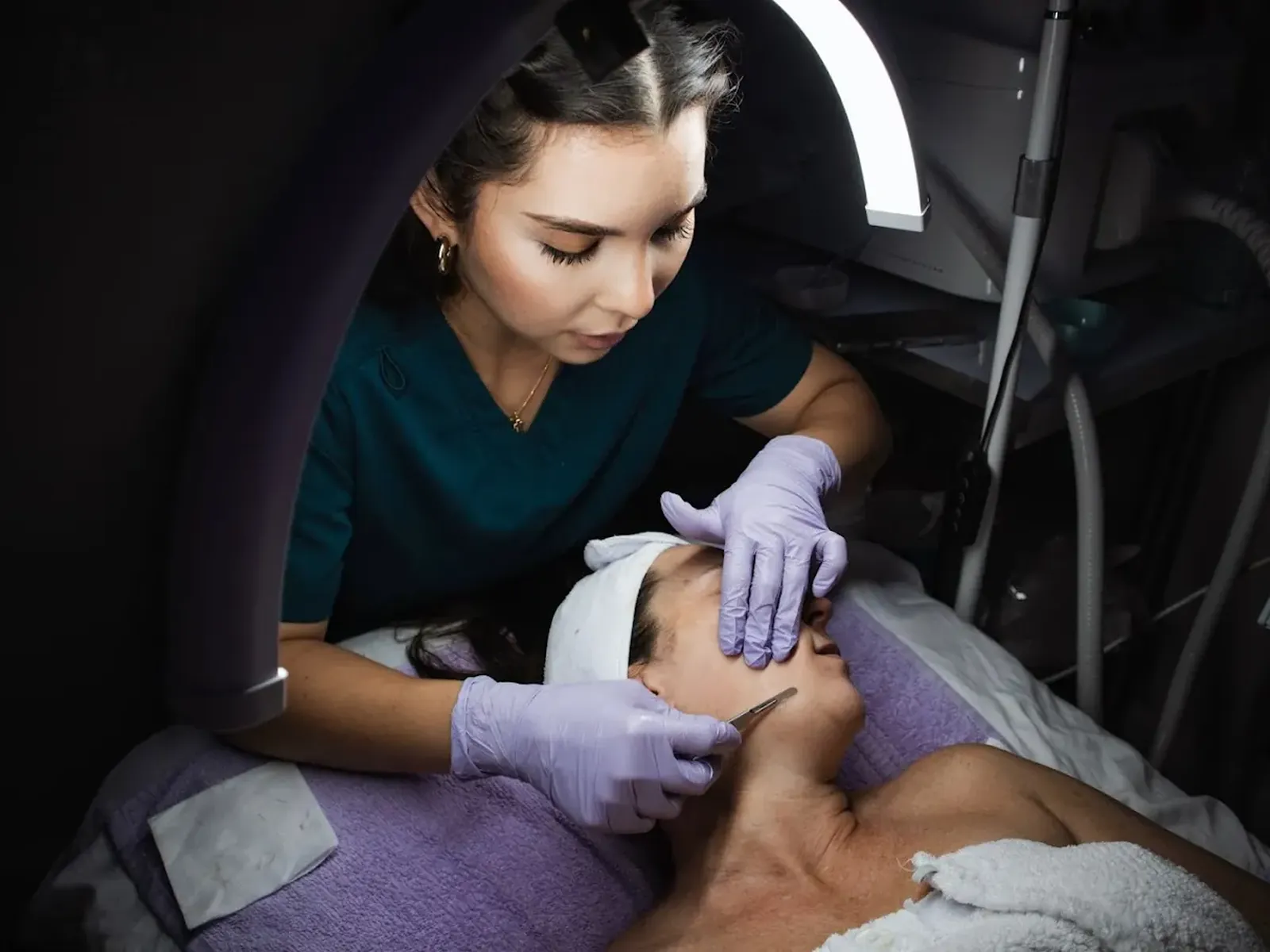
At-home acids are great for maintenance, but a professional treatment gives your skin a fresh start. During a facial I analyze your skin, deep cleanse, exfoliate and extract clogged pores, then build an at-home routine around what I actually see.
If breakouts are your main concern, the Acne Treatment Facial targets congestion directly. If dullness and texture are bothering you, a Deluxe or HydroDermabrasion facial gives an instant glow, and dermaplaning is another gentle way to clear away dead skin. You can compare every option, with prices and durations, on our services page, or read what clients say about their results on our reviews page.
The Bottom Line on AHA vs BHA
When it comes to AHA vs BHA, there is no single winner. AHAs smooth and brighten the surface, while BHAs clear and calm the pores. The right choice depends on your skin type, your goals and how your skin is behaving right now.
If you would like a personal recommendation, send me a message or book a facial at our Orlando studio. I would love to help you find the routine that finally makes your skin glow.